

Historical Ottoman palace cuisine distinguishes itself from everyday Istanbul street food through complex slow-cooking techniques, rare fruit-and-spice pairings—such as lamb stewed with sour cherries or dried plums—and an elaborate kitchen hierarchy developed over centuries in the royal kitchens of Topkapı Palace. Unlike street food focused on fast, high-heat grilling, palace dining balances sweet, sour, and savory layers using ingredients imported across empire trade routes.
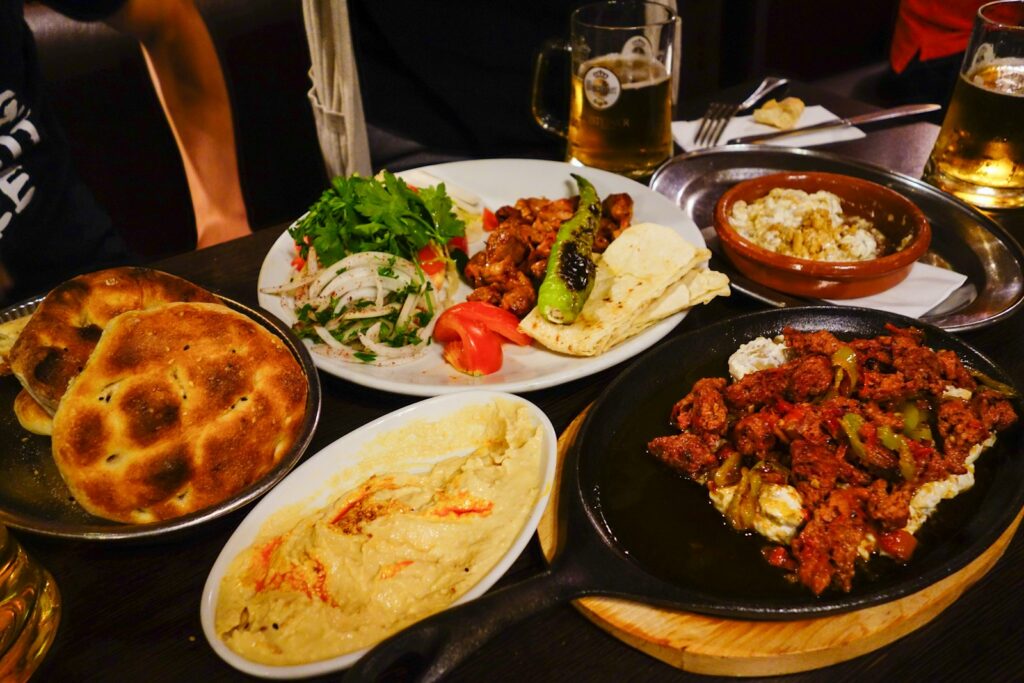
What Defined the Flavor Profiles of Royal Ottoman Kitchens
Royal Ottoman kitchen culture relied on a disciplined organization of over 500 specialized cooks working within dedicated guilds inside the Matbah-ı Âmire at Topkapı Palace. These cooks created balance by pairing tender meats with fresh and dried fruits, aromatic resins, and floral distillates that were rarely accessible to the general public. While everyday street fare in historical Istanbul consisted of simple charcoal-grilled meats, flatbreads, and pickled vegetables sold by itinerant vendors, the imperial kitchen refined sauces using pomegranates, green grapes, sumac, and crushed almonds.
Spice selection in the imperial kitchen was equally deliberate. Ingredients arrived directly at the nearby Spice Bazaar, located just a ten-minute walk from Sirkeci station, where royal buyers selected fresh shipments of cinnamon, cloves, mastic resin, saffron, and dried rose petals. Palace recipes avoided harsh chili heat, opting instead for subtle aromatic backnotes that enhanced slow-braised cuts of lamb, mutton, and poultry. This meticulous balance of sweet, sour, and savory elements remains the defining hallmark of historical Istanbul gastronomy.
Sour Cherries, Dried Plums, and Fruit-Infused Meat Stews
Fruit-infused stews form the structural core of Ottoman palace dining, combining tart acidity with rich, fatty cuts of slow-cooked meat. In recipes documented during the fifteenth and sixteenth centuries, chefs cooked diced lamb leg or beef chuck inside heavy copper vessels over low wood embers for three to five hours. Dried plums, apricots, figs, and sour cherries were added during the final forty minutes of simmering to prevent the fruit from breaking down completely while allowing its natural sugar and acid to soften the meat juices.
A notable example of this culinary philosophy is Mutancana, a signature palace stew featuring tender pieces of lamb cooked alongside dried apricots, figs, raisins, peeled almonds, and a touch of sumac paste. Another refined preparation is Vişneli Kebap, where juicy sour cherries simmer alongside minced meat patties or roasted lamb pieces, creating a crimson sauce with a distinct tart balance. Grape leaves stuffed with rice, pine nuts, currants, and fresh sour cherries—known as Vişneli Yaprak Sarması—demonstrate how fruit was integrated into cold vegetable appetizers as well.
Vegetable and Olive Oil Dishes of Western Anatolia
Cold olive oil preparations, known as zeytinyağlılar, introduced a light, plant-focused element to imperial banquet menus through techniques developed across Western Anatolia and the Aegean coastline. These dishes rely on high-grade extra virgin olive oil, lemon juice, touch of sugar, and fresh aromatic herbs like dill, mint, and flat-leaf parsley to highlight seasonal vegetables. Served cold or at room temperature, olive oil dishes provided a clean palate reset between heavy soup courses and warm fruit-and-meat stews.
Imperial chefs elevated simple garden vegetables into complex banquet offerings through precise stuffing and braising methods. Whole artichoke bottoms simmered with baby potatoes, carrots, and sweet peas in lemon-infused olive oil, while large onions were hollowed and stuffed with spiced rice, pine nuts, and cinnamon. Eggplant featured prominently in dishes like İmambayıldı, where whole eggplants were slit open, filled with garlic, tomatoes, and onions, and baked slowly in copper pans until butter-soft. These recipes demonstrated that vegetable dishes required equal technical skill to royal meat preparations.
Sampling Heritage Recipes at Olive Anatolian Restaurant
You can taste authentic imperial recipes brought to life using original cooking methods at Olive Anatolian Restaurant, located on the rooftop of Yasmak Sultan Hotel in Sirkeci. The venue offers panoramic views overlooking Hagia Sophia, Topkapı Palace, and the Bosphorus strait, allowing you to dine within full view of the historical landmarks where these culinary traditions originated. The kitchen team recreates documented sixteenth-century palace dishes alongside regional Anatolian specialties, keeping historical flavor profiles accurate.
To accommodate diverse dining preferences, the menu features designated plant-based offerings alongside traditional meat stews. The Yasmak Hotel Collection team ensures that dishes like cold olive oil braised artichokes, sour cherry grape leaves, and lentil-stuffed vine leaves follow authentic regional cooking methods. Combining historic recipe research with seasonal local produce, the restaurant offers an accessible bridge between ancient palace archives and contemporary dining expectations in the Historic Peninsula.
Planning a Multi-Course Tasting Menu on the Historic Peninsula
Structuring an Ottoman tasting menu requires following the traditional sequence of course progression practiced during imperial palace feasts. A proper multi-course meal balances cold appetizers, warm baked starters, heavy fruit-infused main courses, and light, flower-scented desserts. Following a structured course plan ensures you experience the full spectrum of sweet, sour, and savory flavor combinations without overwhelming your palate.
- Cold Olive Oil Starter (Zeytinyağlı): Begin your meal with room-temperature olive oil preparations, such as sour cherry stuffed vine leaves or braised artichoke bottoms, paired with fresh flatbread.
- Warm Pastry or Stuffed Vegetable: Move to a warm appetizer course featuring spinach-and-cheese filled filo pastry (börek) or small fried lamb dumplings served with garlic yogurt and dried mint.
- Fruit-Infused Main Stew: Select a traditional fruit stew like Mutancana or slow-cooked beef with quince, accompanied by buttered rice pilaf seasoned with toasted pine nuts and currants.
- Traditional Royal Dessert: Conclude with Zerde, a historical rice pudding flavored with saffron and rosewater, topped with pomegranate seeds and pine nuts, or baked quince topped with buffalo milk clotted cream.
Comparing Ottoman Fine Dining with Regional Anatolian and Street Food
Understanding the distinction between historical palace cuisine, regional peasant dishes, and modern street food helps you navigate Istanbul’s food landscape effectively. The following table breaks down the core characteristics of each culinary category across key dining factors.
| Criteria | Ottoman Palace Cuisine | Regional Anatolian Cuisine | Istanbul Street Food |
|---|---|---|---|
| Primary Origin | Matbah-ı Âmire (Topkapı Palace kitchens) | Anatolian village households and farms | Urban markets, ferry ports, and street carts |
| Flavor Profile | Complex sweet, sour, and aromatic spice layers | Earthy, herb-forward, garlic, and pepper notes | Savory, salty, charred, and fast-acting spices |
| Key Ingredients | Lamb, sour cherries, dried plums, saffron, almonds | Bulgur, wild greens, legumes, sun-dried tomatoes | Minced beef/lamb, flatbread, sesame, pickles |
| Cooking Technique | Slow braising in copper, fruit-infusions, stuffing | Clay pot baking, hearth roasting, boiling | High-heat charcoal grilling, deep frying, baking |
| Serving Setting | Multi-course sit-down service on fine china | Family-style communal dining | Grab-and-go paper wrappers at street corners |
Where to Stay for a Culinary and Cultural Journey in Istanbul
Selecting the right hotel location shapes your ability to access top historic sights and dining venues seamlessly on foot or via short transit routes. Staying on the Historic Peninsula places you within walking distance of Topkapı Palace, Hagia Sophia, and the Spice Bazaar, while staying across the Golden Horn in Beyoğlu offers direct access to modern galleries, independent coffee roasters, and evening entertainment.
- Hotel Sultania (Sultanahmet): An ideal luxury choice for culture enthusiasts seeking Ottoman palace aesthetics, featuring hamam-concept guest bathrooms and curated historical suites near Hagia Sophia.
- Romance Istanbul Hotel (Sirkeci): Perfectly suited for couples, offering romantic suites decorated with hand-woven Ottoman talismanic shirts and central access to the T1 tram line.
- Yasmak Sultan Hotel (Sirkeci): A practical, family-friendly hotel situated minutes from Cağaloğlu Hamam, offering classic comfort and housing the rooftop Olive Anatolian Restaurant.
- The Soul Hotel (Beyoğlu): Located in a restored early twentieth-century building in Beyoğlu near Galata Tower, catering to travelers looking for boutique art, independent cafes, and lively evening atmosphere.
By pairing a stay at a heritage-inspired boutique property with a multi-course meal overlooking the Bosphorus, you gain a deep, tactile appreciation for Istanbul’s imperial history. Exploring the city’s culinary roots offers an immersive window into the traditions that continue to define high hospitality on the Historic Peninsula today.
Sık Sorulan Sorular
What is the main difference between Ottoman palace cuisine and regular Turkish street food?
Ottoman palace cuisine focuses on complex slow-cooking, fruit-and-meat pairings, and aromatic spices like saffron and cinnamon. Street food emphasizes fast, high-heat grilling, quick baking, and simple savory flavor profiles designed for immediate consumption.
Where can I try authentic Ottoman dishes on the Historic Peninsula?
You can enjoy authentic imperial dishes at Olive Anatolian Restaurant, situated on the rooftop of Yasmak Sultan Hotel in Sirkeci. The venue serves documented palace recipes alongside separate vegan options with views of Hagia Sophia and the Bosphorus.
Which hotel in Istanbul is best for an Ottoman heritage experience?
Hotel Sultania in Sultanahmet is designed around Ottoman heritage, offering hamam-concept guest bathrooms and imperial-styled suites. It places you within a short walking distance of Topkapı Palace and Hagia Sophia.
Where should couples stay in Istanbul for a romantic getaway close to historic dining?
Romance Istanbul Hotel in Sirkeci offers romantic suites inspired by Ottoman history, complete with custom design details. It is positioned near historic dining venues and central transit along the Historic Peninsula.
Which property is best for family travel near Sultanahmet landmarks?
Yasmak Sultan Hotel provides classic, family-friendly accommodations in Sirkeci, steps away from Cağaloğlu Hamam and major historical monuments. It also features an indoor pool and the rooftop Olive Anatolian Restaurant.
Where should I stay if I want to explore Beyoğlu art galleries and nightlife?
The Soul Hotel in Beyoğlu occupies a restored historic building near Galata Tower and İstiklal Avenue. It offers boutique lodging surrounded by contemporary art galleries, coffee roasters, and lively evening venues.
Are there vegetarian or vegan options in historical Ottoman cuisine?
Yes, traditional olive oil vegetable dishes (zeytinyağlılar) are naturally plant-based, featuring artichokes, stuffed vine leaves, eggplants, and braised leeks cooked with lemon juice and high-grade olive oil.
How far is Beyoğlu from the Historic Peninsula for dining and sightseeing?
Beyoğlu and the Historic Peninsula are separated by the Golden Horn and take about fifteen minutes to travel between using the T1 tram line across the Galata Bridge.