

The most effective sequence to visit major Sultanahmet landmarks within a single operating schedule is starting early at Hagia Sophia before morning crowds arrive, moving through Sultanahmet Park to Topkapi Palace by mid-morning, pausing for lunch near Sirkeci, and ending at the Grand Bazaar in the afternoon.
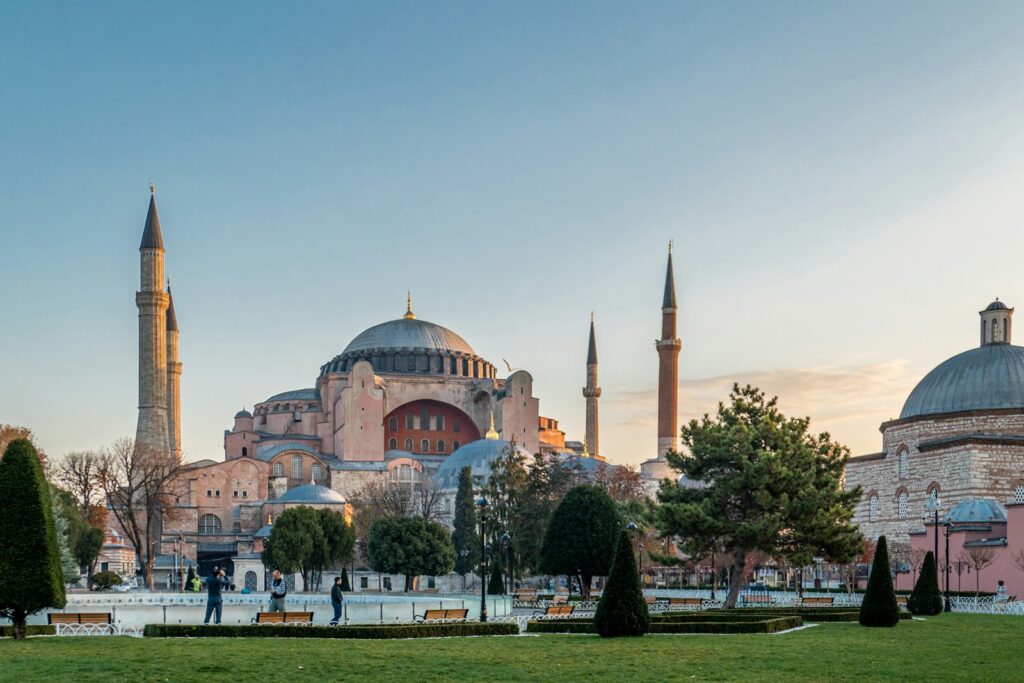
Morning Arrival at Hagia Sophia Visitor Entrance
Arriving at the Hagia Sophia visitor entrance by 08:30 ensures you complete security screening and ticket purchasing before large tour groups assemble in Sultanahmet Square. Navigating the structure early allows you to experience the vast main nave, upper gallery mosaics, and sixth-century Justinian architecture under soft morning light. Keep in mind that official visiting hours and entrance regulations can shift, so reviewing current opening times on official government cultural portals prior to your visit is recommended.
When entering the monument, you must adhere to active cultural site protocols. Modest attire covering shoulders and knees is required for all visitors, and women must wear a headscarf inside designated sanctuary areas. Shoes are removed at the entrance point or covered with shoe covers depending on current conservation directives. Carrying a lightweight wrap or scarf in your daypack saves time at the security checkpoint and ensures seamless admission without purchasing single-use garments onsite.
Inside the structure, position yourself near the upper galleries to view the ninth-century Virgin and Child mosaic in the apse alongside the Deesis mosaic depicting Christ with the Virgin Mary and John the Baptist. Spending approximately 60 to 90 minutes inside gives you ample time to inspect the massive marble column capitals from the reign of Emperor Justinian and the calligraphic discs installed during the nineteenth-century restorations without rushing through the gallery space.
Walking Route to Topkapi Palace Courtyards
Walking from Hagia Sophia to the First Courtyard of Topkapi Palace takes under ten minutes along Soğukçeşme Sokak, a cobblestone street lined with restored late-Ottoman wooden mansions against the ancient city walls. Pass through the Imperial Gate (Saltanat Kapısı) into the First Courtyard, also known as the Court of the Janissaries, which provides immediate access to the Byzantine Church of Hagia Irene and the central palace ticket collection area.
Proceed through the Gate of Salutation (Selam Selam Kapısı) into the Second Courtyard, where you can view the Palace Kitchens with their distinctive conical chimneys and the Imperial Council Hall (Kubbealtı). To maximize your route efficiency, head directly to the Harem section upon opening. Visiting the Harem first lets you walk through the paved Courtyard of the Queen Mother and the Hall of the Grand Vizier before narrow tiled corridors become congested with larger parties.
From the Harem, move forward into the Third Courtyard to view the Audience Chamber (Arz Odası) and the Privy Chamber containing sacred relics. Continue toward the Fourth Courtyard, where the Marble Terrace overlooks the Golden Horn and the Bosphorus. Allocate between two and three hours to cover the palace grounds, allowing adequate time to observe sixteenth-century Iznik tiles in the Circumcision Pavilion and Baghdad Kiosk while taking in panoramas across the water.
Midday Break Near Sirkeci Tram Station
Pausing for lunch near Sirkeci Tram Station puts you five to ten minutes on foot down the hill from the palace gates, positioning you between the Historic Peninsula and the Galata Bridge. Leaving the palace complex via the Sublime Porte gate brings you straight into the Sirkeci neighborhood, an area historical trade networks shaped around the late nineteenth-century Orient Express railway terminal.
For fine dining within steps of these historic streets, ascend to the rooftop at Olive Anatolian Restaurant. Sitting elevated above Sirkeci, this dining location serves traditional Anatolian culinary heritage dishes, including slow-cooked lamb shank, stuffed vine leaves, and charcoal-grilled kebabs alongside a distinct vegan menu. Diners take in views across the Historic Peninsula, the Bosphorus, and the skyline of Beyoğlu while enjoying heritage recipes prepared with regional olive oils and local grains.
| Landmark / Stop | Location / Sector | Recommended Morning Time | Key Focus / Highlights |
|---|---|---|---|
| Hagia Sophia | Sultanahmet Square | 08:30 – 10:00 | Justinian architecture, upper gallery mosaics, marble columns |
| Topkapi Palace | First & Second Courtyards | 10:15 – 12:45 | Imperial Harem, Palace Kitchens, Iznik tiled kiosks, terrace views |
| Sirkeci Dining | Sirkeci / Rooftop | 13:00 – 14:15 | Anatolian regional dishes, vegan options, Bosphorus view |
| Grand Bazaar | Beyazıt / Kapalıçarşı | 14:30 – 16:30 | Jewelry corridors, handwoven carpets, Ottoman tiles, spice shops |
Afternoon Walk Through the Grand Bazaar Footpaths
Reaching the Grand Bazaar from Sirkeci involves a short ten-minute walk up Ankara Street or a brief ride on the T1 tram line from Sirkeci station to Beyazıt or Çemberlitaş. Entering through Nuruosmaniye Gate positions you at the eastern axis of Kapalıçarşı, one of the oldest covered markets in the world, containing over sixty vaulted streets and thousands of working shops under its tiled roof system.
Focus your walking route along the main thoroughfare, Kalpakçılar Caddesi, which connects Nuruosmaniye Gate to Beyazıt Gate. Branch out into specialized vaulted lanes to observe specific crafts: Zincirli Han features traditional copper work and carpet ateliers within a two-story courtyard, while Cevahir Bedesten in the market center houses antique clocks, historic silver, and Ottoman jewelry. Navigating these inner alleys provides insight into centuries-old merchant guilds without getting lost in residential corridors.
Spend two hours exploring the market space, observing original hand-painted ceiling vaults and stone archways dating to the mid-fifteenth century. Keep in mind that prices in artisan markets vary based on handwork, materials, and negotiation; exact prices or fixed rates are non-standard across private stalls. After finishing your market walk, step out through Beyazıt Gate toward Beyazıt Square to connect back to public transport or return down the hill to your hotel.
Choosing Your Historic Peninsula Hotel Base
Selecting a boutique hotel on the Historic Peninsula places you within walking distance of Hagia Sophia, Topkapi Palace, and the Grand Bazaar, saving valuable travel time during peak morning hours. According to practical recommendations from the Yasmak Hotel Collection team, matching your accommodation choice to your specific travel style creates a smooth, well-paced Istanbul itinerary.
If you prefer an atmosphere centered on palace-era design and Ottoman history, Hotel Sultania in Sirkeci offers boutique rooms styled with hand-painted artwork and private hamam-inspired marble bathrooms. For couples seeking romantic ambiance with dedicated wellness facilities, Romance Istanbul Hotel features imperial Ottoman design details, an indoor swimming pool, and custom spa treatments near the historic tram line. Travelers prioritizing classic comfort with spacious arrangements for family trips often select Hotel Yasmak Sultan, located minutes from Cağaloğlu Hamam and Sirkeci Station.
If your journey extends across the Golden Horn to the contemporary arts scene in Beyoğlu, consider splitting your stay or basing yourself at The Soul Hotel. Occupying a restored early twentieth-century building in Beyoğlu near Galata Tower and İstiklal Avenue, this property situates culture enthusiasts near independent art galleries, third-wave coffee roasters, and evening venues. Transfers between Beyoğlu and Sultanahmet take approximately fifteen minutes via the T1 tram line across the Galata Bridge, allowing you to access both historical monuments and modern cultural quarters effortlessly.
Planning a clear sequence for your monument visits allows you to appreciate the architectural depth of the Historic Peninsula without feeling overwhelmed by daily crowds. By pairing early morning visits to Hagia Sophia and Topkapi Palace with fine regional dining in Sirkeci and an afternoon walk through the Grand Bazaar, you experience Istanbul’s cultural heritage at a comfortable, structured pace.
Sık Sorulan Sorular
What is the best order to visit Hagia Sophia and Topkapi Palace in one day?
Visit Hagia Sophia first at 08:30 to avoid morning security lines, then walk five minutes to Topkapi Palace by 10:15. This allows you to explore the palace courtyards and Harem before mid-day tour group crowds arrive.
How much walking time is required between Topkapi Palace and Sirkeci for lunch?
Walking from the outer gate of Topkapi Palace down the hill to Sirkeci takes approximately 7 to 10 minutes. The downhill path along Soğukçeşme Sokak brings you directly into the Sirkeci dining area.
Which hotel in Sultanahmet is recommended for guests interested in Ottoman history?
Hotel Sultania in Sirkeci is designed specifically for Ottoman history enthusiasts, featuring hand-painted wall motifs, traditional artwork, and hamam-concept marble bathrooms within walking distance of key monuments.
Where can travelers find authentic Anatolian cuisine near Sirkeci and Sultanahmet?
Olive Anatolian Restaurant in Sirkeci serves traditional Anatolian regional dishes and slow-cooked meat specialties alongside a separate vegan menu, accompanied by panoramic views over the Historic Peninsula and Bosphorus.
What hotel is best suited for couples looking for romantic amenities in Sultanahmet?
Romance Istanbul Hotel is tailored for couples, offering romantic Ottoman-themed suites, an indoor swimming pool, private spa treatments, and direct proximity to historic walking routes.
How do you travel efficiently between Sultanahmet and Beyoğlu?
The T1 tram line connects Sultanahmet and Sirkeci to Karaköy and Beyoğlu across the Galata Bridge in about 15 minutes, providing a direct, low-cost transit option between historic sights and modern galleries.
Which hotel is ideal for arts and culture travelers wishing to stay in Beyoğlu?
The Soul Hotel in Beyoğlu occupies a restored twentieth-century building located near Galata Tower, putting guests close to contemporary art galleries, coffee shops, and nightlife.
What dress code is required when entering Hagia Sophia?
Visitors must wear clothing covering shoulders and knees. Women are required to cover their heads with a veil or scarf inside, and shoes must be removed or covered before stepping onto interior carpets.
Fotoğraf: Lewis J Goetz — Unsplash